Introduction
Since its launch, XRP has remained one of the most widely discussed digital assets in the crypto market. From early adopters to seasoned investors, this digital asset has consistently captured the attention of the crypto community. Like many other cryptocurrencies, XRP has been subject to a wide array of forecasts and predictions from experts, analysts, and influencers alike. Some predictions have been overwhelmingly positive, envisioning skyrocketing prices and mainstream adoption. Others, however, have been overly pessimistic, predicting catastrophic failures that never materialized. These highly speculative forecasts have led to confusion and fear among investors, particularly when the predictions are presented as certainty.
Among the most infamous of these forecasts are the Worst XRP Predictions—claims that have consistently failed to come true yet created significant market noise. These predictions range from total collapse scenarios to assertions that XRP would never recover from market downturns. In some cases, investors reacted impulsively to these predictions, selling their holdings or avoiding XRP entirely, only to later see the cryptocurrency recover and thrive. Understanding why these predictions were wrong provides valuable insight for both new and experienced traders, highlighting the importance of critical thinking and long-term perspective in the cryptocurrency market.
The crypto market is notorious for its volatility, and XRP is no exception. Analysts and influencers often make bold statements about price movements, regulatory outcomes, or the cryptocurrency’s future relevance. While some of these predictions are based on thorough research, others rely on speculation, fear, or misunderstanding of XRP’s underlying technology and use cases. As a result, the Worst XRP Predictions are not merely wrong; they can actively mislead investors, encouraging decisions that may not align with long-term strategy. These failed predictions serve as cautionary tales, emphasizing the need for investors to conduct their own research and evaluate claims critically before taking action.
XRP’s unique position in the cryptocurrency ecosystem also makes it a frequent target for bold and often inaccurate predictions. Unlike many other digital assets that primarily serve as stores of value or speculative instruments, XRP is specifically designed for fast, low-cost cross-border payments. This utility gives it a fundamentally different risk and growth profile compared to other cryptocurrencies. Unfortunately, many analysts fail to account for these nuances, producing alarmist predictions that ultimately become some of the Worst XRP Predictions on record.
In this article, we will delve into five of the most notable Worst XRP Predictions that went totally wrong. We will examine the reasoning behind each prediction, why it failed, and what lessons investors can draw from these mistakes. By analyzing these past errors, readers will gain a better understanding of XRP’s resilience, the pitfalls of relying solely on speculative forecasts, and the importance of distinguishing hype from reality. This examination not only sheds light on XRP’s journey but also offers valuable insights into navigating the broader cryptocurrency market responsibly.
By understanding these missteps, investors can arm themselves against misinformation, hype-driven panic, and the fear that often accompanies negative predictions. The story of XRP and the Worst XRP Predictions highlights how even the most seemingly confident forecasts can falter and how a well-informed, patient approach can often yield better results than reactionary decisions based on speculation.
1. XRP Will Completely Collapse After SEC Lawsuit
One of the most infamous Worst XRP Predictions emerged when the U.S. Ripple Labs faced a lawsuit brought by the Securities and Exchange Commission (SEC). At that time, many analysts and influencers predicted that XRP’s price would immediately crash to zero. Some even claimed that the cryptocurrency would be permanently removed from major exchanges, effectively ending its existence.
Prediction: XRP would lose all its value and vanish from the market entirely.
Reality: Despite experiencing short-term volatility, XRP survived the lawsuit’s impact. Its price rebounded over time, and several major exchanges reinstated trading after the initial panic subsided. Rather than disappearing, XRP continued to be actively traded and maintained a strong presence in the crypto market.
So why did this prediction fail? One of the main reasons is XRP’s strong institutional backing. Ripple Labs had already partnered with numerous banks and financial institutions around the world, creating real-world use cases that supported XRP’s utility. This institutional trust acted as a stabilizing force, helping XRP weather regulatory uncertainty.
Additionally, the crypto community played a crucial role in disproving this prediction. XRP holders, traders, and advocates rallied behind the cryptocurrency, maintaining liquidity and demand. This collective resilience highlights how hype and fear-driven narratives often exaggerate the perceived impact of regulatory events.
This example serves as a key lesson for anyone evaluating Worst XRP Predictions: even serious legal or regulatory challenges do not automatically guarantee a cryptocurrency’s collapse. Factors such as community support, practical utility, and institutional adoption can significantly mitigate risk.
In hindsight, the SEC lawsuit episode became a turning point rather than a catastrophic end for XRP. While the prediction of total collapse captured headlines and created panic, the reality proved that XRP is far more resilient than skeptics anticipated. For investors and enthusiasts, this incident underscores the importance of separating sensationalist predictions from fundamental market realities—a principle that applies to all Worst XRP Predictions across the cryptocurrency landscape.
2. XRP Will Never Reach $1 Again
Another notorious entry on the list of Worst XRP Predictions came during bearish periods in the crypto market. Many analysts and commentators confidently claimed that XRP would never reach $1 again. These forecasts were largely based on short-term market downturns, negative sentiment, and ongoing regulatory uncertainty surrounding Ripple Labs.
Prediction: XRP’s value would stagnate below $0.50 indefinitely, with no realistic chance of recovery.
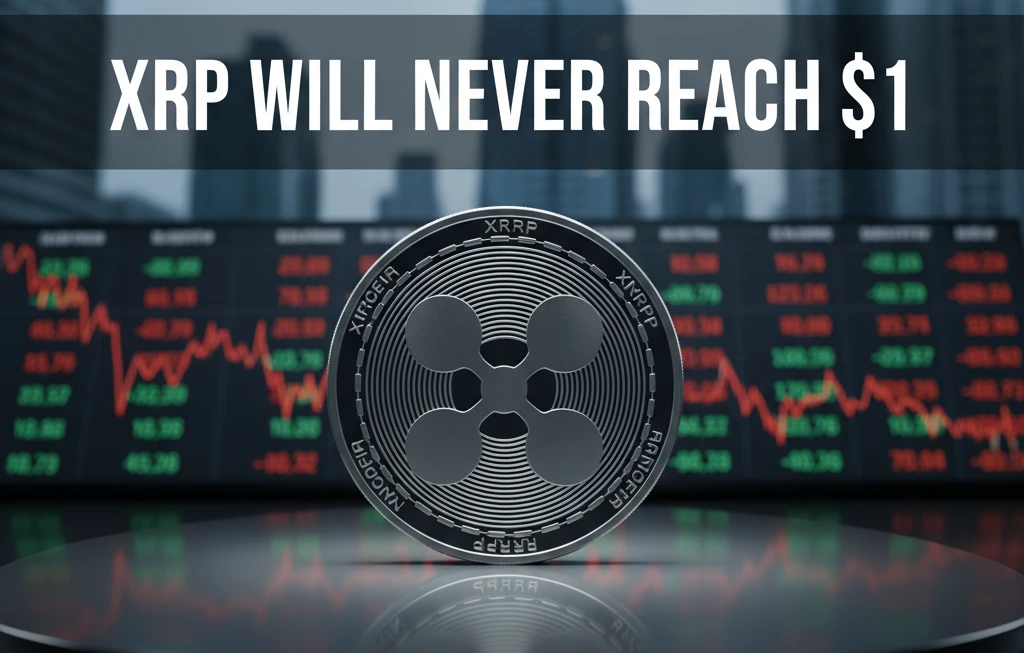
Reality: Contrary to these pessimistic claims, XRP eventually surpassed $1 during several market rallies. Despite volatility and periods of stagnation, long-term trends demonstrated resilience and growth potential that short-term analysts failed to recognize.
This situation perfectly illustrates the dangers of succumbing to hype or fear. The claim that XRP would never reach $1 again is one of the clearest examples of Worst XRP Predictions. It shows how bearish narratives can be exaggerated, particularly during market corrections, leading investors to make poor decisions based on incomplete or overly negative information.
One reason this prediction failed is that XRP’s adoption and utility continued to grow despite market fluctuations. Ripple Labs’ partnerships with banks and payment providers, combined with active trading communities, maintained demand and liquidity. As a result, the fundamentals supporting XRP’s price were strong enough to overcome temporary downturns.
Investors who believed the prediction that XRP could never reach $1 again missed significant opportunities. The market eventually proved that short-term pessimism does not always reflect the true long-term potential of a cryptocurrency. This reinforces the importance of critically evaluating all forecasts and recognizing that the Worst XRP Predictions are often driven by fear rather than fact.
In retrospect, the claim that XRP would never recover demonstrates a recurring theme in cryptocurrency markets: volatility can inspire alarmist predictions, but these are not always accurate. Long-term trends, market adoption, and utility ultimately determine resilience. This example serves as a vital lesson for both new and seasoned investors on how to navigate hype and avoid being misled by the Worst XRP Predictions.
3. XRP Is Doomed Because of Centralization Concerns
Another widely circulated entry among the Worst XRP Predictions was the claim that XRP would fail due to its perceived centralization. Some analysts compared XRP to Bitcoin or Ethereum, arguing that its structure was too centralized and that this would drive away investors, stifle adoption, and ultimately render the cryptocurrency irrelevant.
Prediction: XRP would become irrelevant because centralization would undermine its credibility and utility.
Reality: Despite these warnings, XRP has continued to thrive. Ripple Labs has strengthened partnerships with banks and financial institutions around the world, increasing adoption and practical use of XRP. The cryptocurrency has maintained strong market relevance and a loyal community that recognizes the advantages of its design.
This example highlights why many Worst XRP Predictions fail: they often stem from a misunderstanding of XRP’s purpose and role in the broader financial ecosystem. While decentralization is a core principle for many cryptocurrencies, XRP was intentionally designed with a level of centralization to facilitate faster, more efficient transactions and ensure regulatory compliance. Far from being a weakness, these factors make XRP highly practical for cross-border payments.
Moreover, centralization in XRP allows Ripple to manage its network with greater predictability and stability. Unlike highly decentralized networks, where transaction processing can be slower or more expensive, XRP’s approach ensures fast and low-cost transfers. This real-world utility has helped XRP sustain adoption even as critics highlighted centralization as a major flaw.
Investors who feared that centralization would doom XRP missed the bigger picture. This serves as a clear lesson on the limitations of speculative predictions and the importance of understanding a cryptocurrency’s design and use case. Many of the Worst XRP Predictions are based on superficial comparisons rather than practical insights, and this one is no exception.
In conclusion, concerns about centralization have not derailed XRP. Instead, the cryptocurrency’s architecture has facilitated adoption, efficiency, and regulatory acceptance—elements that are vital for long-term success. This case underscores the importance of looking beyond fear-driven forecasts when evaluating Worst XRP Predictions and considering the real-world functionality of digital assets.
4. XRP Will Be Replaced by Newer Cryptocurrencies
One of the recurring entries among the Worst XRP Predictions is the claim that newer cryptocurrencies would completely replace XRP. During periods of rapid innovation in the blockchain and crypto space, analysts argued that decentralized finance (DeFi) platforms, smart contract-enabled tokens, and emerging altcoins would render XRP obsolete.
Prediction: XRP would become irrelevant and be entirely replaced by newer tokens offering advanced functionalities.
Reality: Despite the rise of numerous competitors, XRP has maintained its position as one of the top cryptocurrencies in the market. Ripple’s strategic partnerships with banks, payment providers, and financial institutions continue to strengthen its use case for cross-border payments. This focus gives XRP a competitive edge that newer cryptocurrencies cannot easily replicate.
This example of Worst XRP Predictions underscores a critical lesson for crypto investors: not all digital assets are directly competing. While some cryptocurrencies aim to power decentralized applications or smart contracts, XRP’s niche is fast, low-cost international money transfers. By concentrating on a specific problem in the financial ecosystem, XRP has maintained its relevance and utility despite the emergence of new technologies.
Another reason this prediction failed is the practical adoption of XRP in real-world use cases. Banks and financial institutions around the globe continue to implement RippleNet solutions for faster cross-border settlements. Unlike many experimental cryptocurrencies, XRP provides a tangible solution for financial efficiency, which has ensured its survival and ongoing demand.
Investors who believed the claim that XRP would be replaced may have underestimated the importance of practical utility in the crypto market. This prediction is a classic example of how speculation and hype can fuel the Worst XRP Predictions, often misleading both new and experienced market participants.
In conclusion, the claim that newer cryptocurrencies would make XRP irrelevant serves as a reminder that each digital asset has unique strengths. XRP’s specialization in banking and payments has allowed it to thrive alongside emerging platforms. Understanding these distinctions is essential for evaluating any future forecasts, particularly those that may become another example of the Worst XRP Predictions in the cryptocurrency world.
5. XRP Will Never Recover After Market Crashes
One of the most persistent Worst XRP Predictions is the claim that XRP would never recover after major market crashes. Throughout cryptocurrency history, analysts and commentators repeatedly warned that XRP’s value would be permanently devalued following sharp downturns. Notable examples include the 2018 bear market and the 2021 market correction, both of which caused significant price drops.
Prediction: XRP would be permanently devalued after every crash, with no realistic chance of recovery.
Reality: Contrary to these pessimistic forecasts, XRP has repeatedly bounced back after market downturns. Following each crash, XRP demonstrated resilience by regaining momentum, attracting renewed investor interest, and stabilizing its market presence. These recoveries highlight the cryptocurrency’s strong fundamentals and the dedication of its user community.
This prediction is a classic example of how extreme pessimism often fuels the Worst XRP Predictions. Analysts who focus solely on immediate losses or short-term market trends frequently overlook long-term recovery potential. XRP’s price movements are influenced by multiple factors, including adoption, institutional support, and market sentiment. When these fundamentals remain strong, the asset has the capacity to rebound, even after severe market corrections.
Market crashes are a natural part of the cryptocurrency ecosystem, and XRP’s performance demonstrates that downturns do not necessarily dictate long-term outcomes. Investors who reacted impulsively to these alarmist predictions often missed opportunities to benefit from the subsequent price recoveries. This serves as a crucial lesson in distinguishing between short-term fear-driven forecasts and the underlying potential of an asset.
Moreover, XRP’s repeated recoveries reinforce the importance of community resilience. The support from traders, investors, and financial institutions helps maintain liquidity and confidence in the coin, mitigating the effects of negative predictions. The persistence of XRP through multiple market cycles proves that not all bearish forecasts are accurate.
In conclusion, the idea that XRP could never recover after market crashes is among the most misleading Worst XRP Predictions in crypto history. Understanding the coin’s long-term resilience and fundamentals allows investors to navigate market volatility more effectively and avoid falling prey to fear-based speculation. XRP’s track record shows that recovery is not only possible but likely for assets with strong real-world utility and community support.
Lessons Learned from Failed Ripple Predictions
What can investors learn from these failed Ripple predictions?
Don’t trust hype without data.
Understand market cap realities.
Technology adoption takes years, not months.
Legal risks can derail even the best projects.
How to Approach Worst XRP Predictions Today
Instead of chasing wild claims, investors should analyze fundamentals. Look at Ripple’s partnerships, transaction growth, and legal clarity. Ignore emotional trading or sensational headlines.
The Role of the SEC Case in Shaping Predictions
The SEC lawsuit against Ripple changed everything. It made analysts cautious, yet also showed that regulatory battles don’t always destroy a project. Many Worst XRP Predictions failed because they underestimated Ripple’s resilience.
XRP’s Real Strengths Beyond Predictions
Beyond the hype, XRP has real strengths:
Transactions settle in 3–5 seconds.
Costs are extremely low.
Ripple has partnerships with banks worldwide.
It provides real utility in remittances and liquidity.
These facts matter more than failed forecasts.
Investor Mindset: Avoiding the Hype
The best way to deal with Worst XRP Predictions is to filter out the noise. Focus on the project’s real use cases and long-term growth instead of falling for unrealistic claims.
Conclusion
Ripple has been one of the most hyped cryptocurrencies in history, and with hype comes exaggerated predictions. From hitting $100 to replacing the U.S. dollar, many bold forecasts turned out completely wrong. But that doesn’t mean Ripple has no value. Its utility in cross-border payments remains strong, and it continues to evolve despite legal challenges.
The key takeaway? Treat Worst XRP Predictions with skepticism, focus on fundamentals, and avoid being swayed by extreme claims.